






The Bunker History
Come and witness the three lives of the bunker starting with its role as an RAF ROTOR Station, then a brief period as a civil defence centre through to its most recent life as a Regional Government HQ.

An overview
Designed for up to 600 military and civilian personnel, possibly even the Prime Minister, their collective task being to organise the survival of the population in the awful aftermath of a nuclear war.
The Bunker had three main lives. Initially as an RAF ROTOR Station and latterly a Regional Government Headquarters, with a brief period in the 1960’s as a civil defence centre. There were also spare bunk beds in the tunnel, to help accommodate some of the hundreds of civilian and military personnel that would be stationed here in time of nuclear attack. The bunker was built on land requisitioned from the local farmer J A Parrish.
Paradoxically as the heat of the Cold War died down, the bunker and it’s ancillary systems were no longer required by the Government, and were costing up to 3 million pounds a year to keep on standby. Upon decommissioning in 1992 the bunker was bought back from the government by the Parrish family, at a closed bid public auction, and hence is now privately owned.
Floor by Floor
The Mast is the only thing visible from the air that would have been a clue to a hidden bunker deep beneath the Essex countryside.
The Bunker tour starts at this simple bungalow, originally built in 1952 by the Air Ministry. The Bungalow guards the entrance to the Bunker.
Just inside the bungalow is a 120m long tunnel which leads into the main bunker. To the left of the bungalow are the standby generators with enough fuel to run continuously for 3 months. The bungalow and tunnel are heavily reinforced, and serve mainly as protection from the blast and radiation of a nuclear bomb.
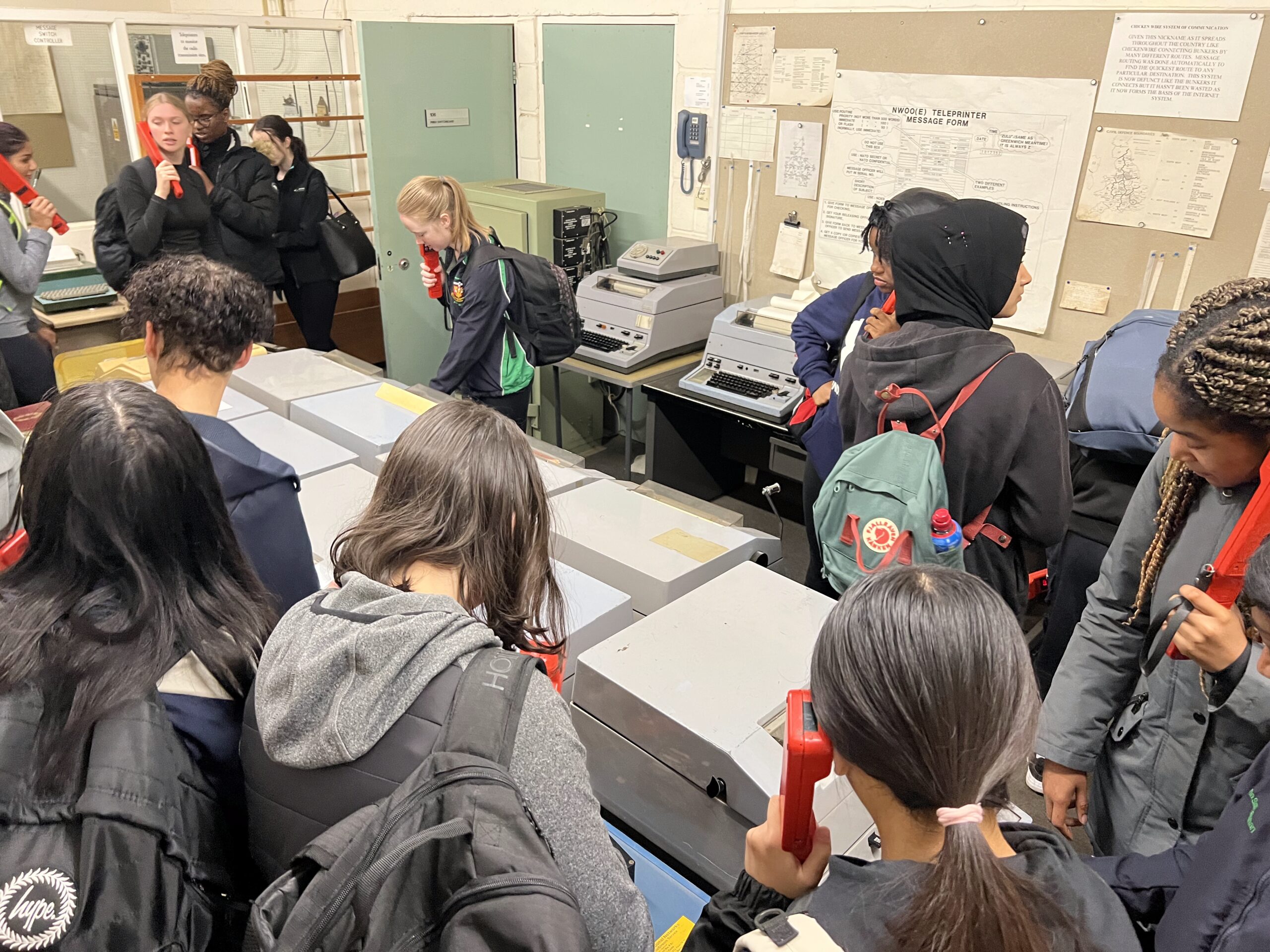
Up to 80 ft below the Essex Countryside lies the heart of the bunker. It is on this first level that the main communication, military, and plant equipment is situated. It was thought this level was safest from attack. As you walk out of the entrance tunnel through the 1.5 tonne blast doors into the bunker, the first rooms you come across all deal with communication.
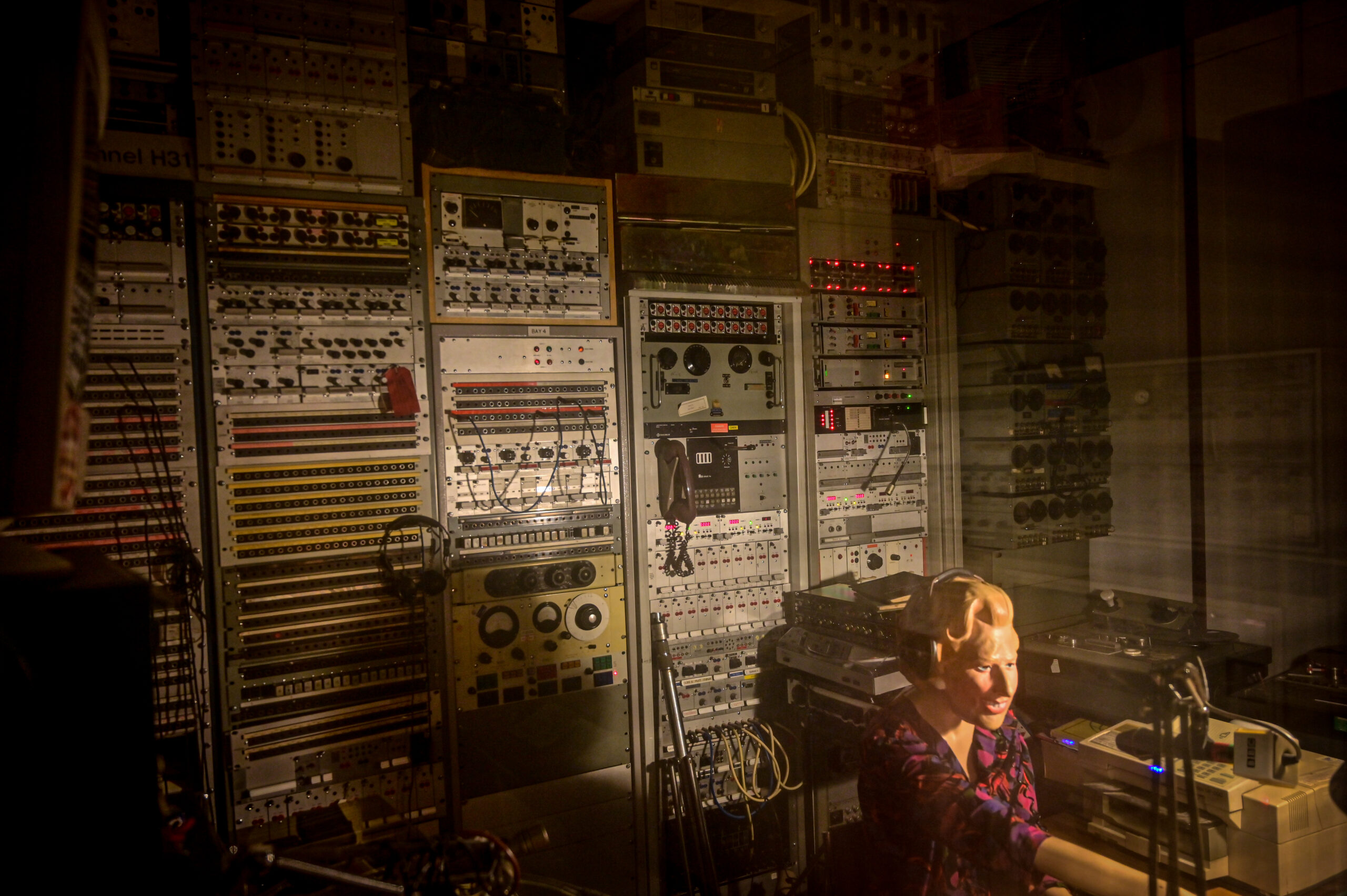
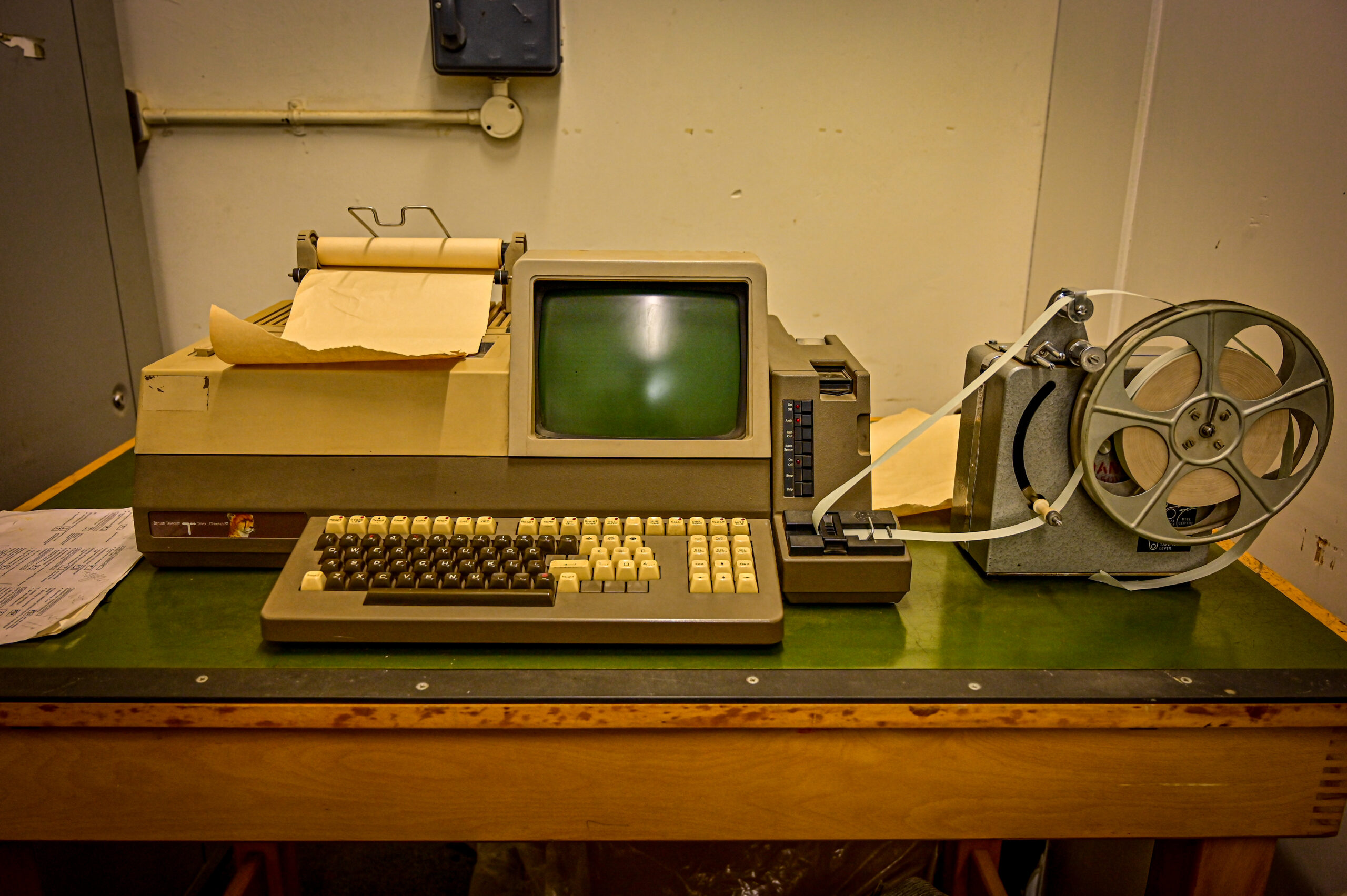
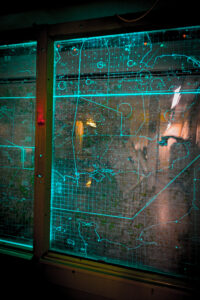
Also on the ground level is one of the most important rooms, the plotting room. This was where aircraft, friend or foe, were tracked 24 hours a day, and latterly where the plotting and analysis of nuclear explosions would have taken place.
Vital to the health of the Bunker’s inhabitants was the plant room also based on this level. From here millions of cubic litres of air were filtered, recycled and cooled, to keep the personnel fully supplied with breathable safe air. It also kept the bunker under positive air pressure, thus helping to keep radioactive dust out.
The second level is the government level. In time of nuclear attack a representative of every level of government from the armed forces to the Ministry of Social Security would have a role in the bunker.
As a Regional Government HQ a cabinet minister would assume the role of Commissioner with the power of life and death! In its first life this level was tied into the plotting room below, by means of a large hole in the floor allowing RAF controllers to get a good overview of the whole situation.
The top level of the bunker deals with the day to day existence of the bunkers inhabitants. A small surgery, several washrooms, dormitories, and a large canteen were all on this level. The canteen is still used today to refresh our visitors.
All supplies in the bunker were sufficient for 3 months. If necessary the personnel needn’t leave the bunker at all for that period. It was assumed this would give time for the situation outside to settle enough for limited excursions.
Towards the exit to the bunker is the original canteen, still fitted with all its orginal catering equipment.
And finally the exit…


How to find us
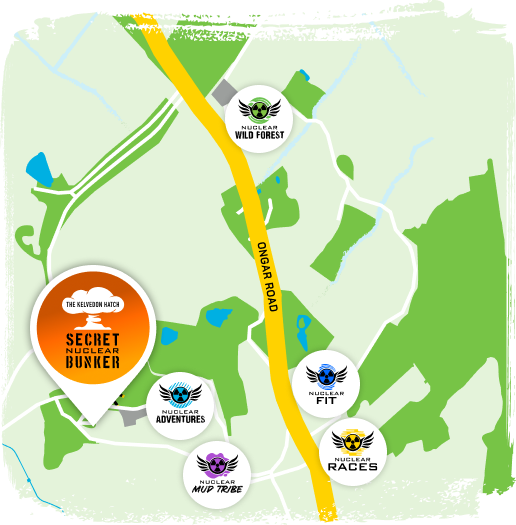
Access is from the A128 Chipping Ongar to Brentwood road at Kelvedon Hatch. If you have GPS, use CM15 0LA and look out for the Brown Tourist signs.
Note: Sat Nav may drop short of the main entrance. Continue until you see brown signs on A128.
Download the what3words app and navigate to: pretty.then.hoping. This will bring you directly to the Secret Nuclear Bunker.